
Should schools focus on preparing students for real life or for University? Wait...aren't those the same thing?
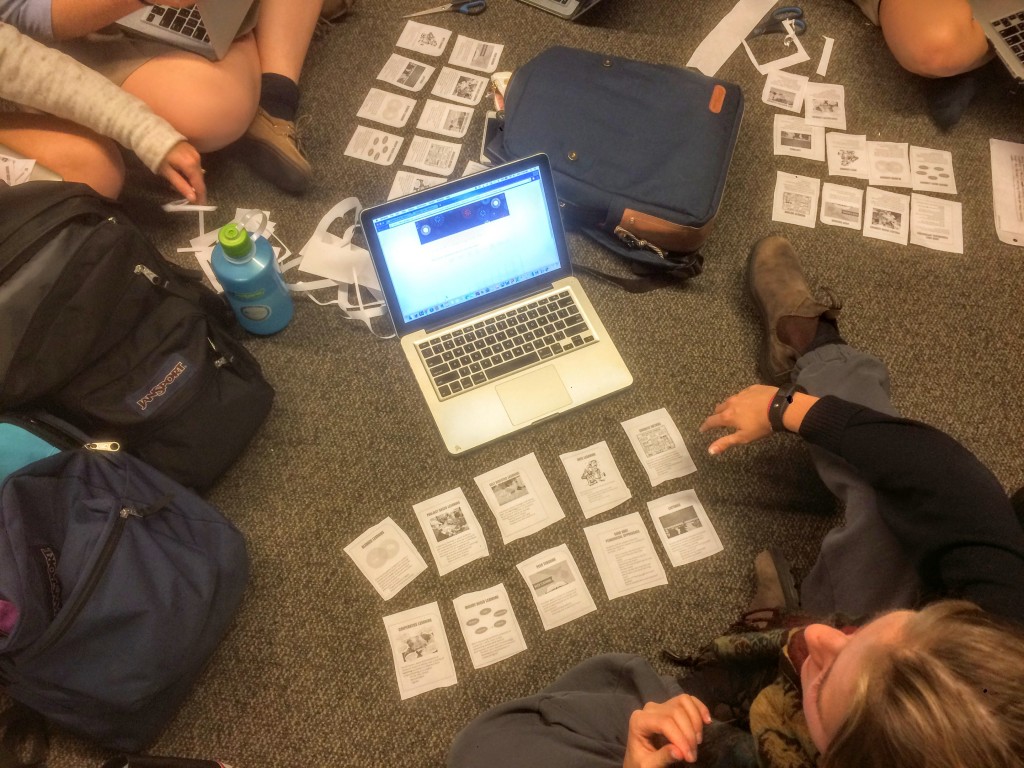 As I explained in my last post, recent conversations with students have led me to question my goal of helping students gain so-called "21st Century Skills" (aka life skills), such as collaboration, adaptability, divergent thinking, creativity, problem solving, innovation and teamwork. As such, I conducted a very informal study with my students, asking them to rank various types of learning activities according to different criteria. They used the cards to sort their ideas and then recorded the results using a Google form so that I could analyze the data. Here are the results.
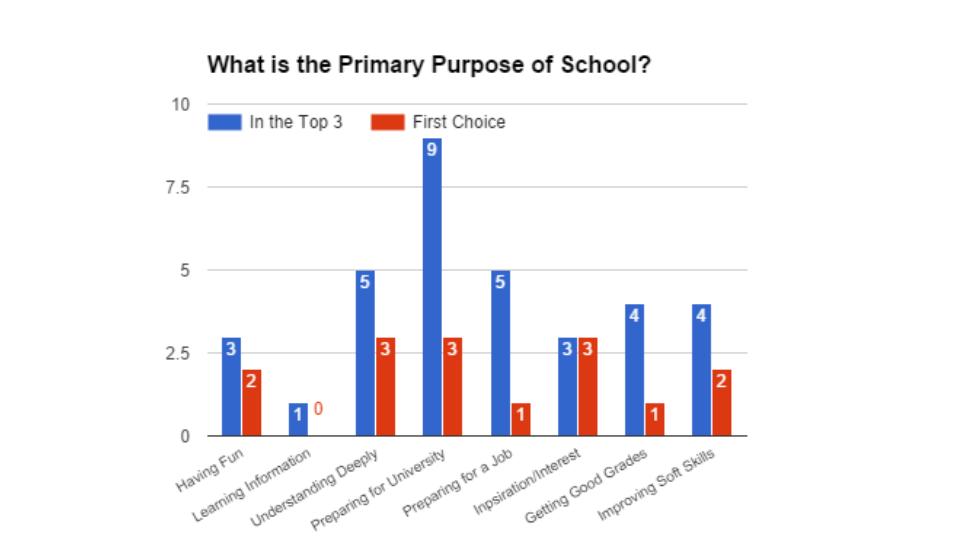 The Purpose of School: I added in the question about the purpose of school during the conversation that I had with the students before they started the activity. I realized that my idea of what I was preparing them for (real life) was different then their idea of what they were being prepared for (postsecondary) and therefore, they had different ideas on what learning activities would be effective.
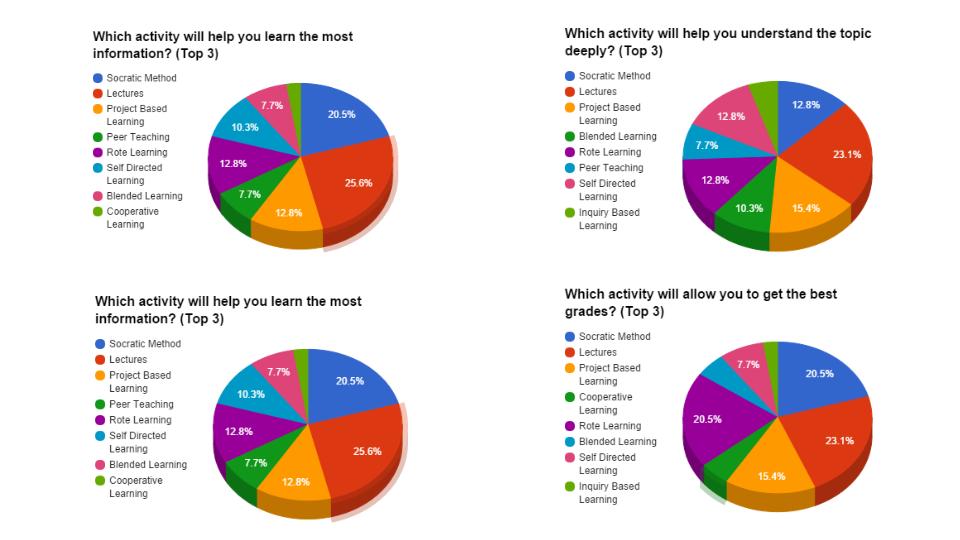 Lectures: It’s no surprise then, that lectures rate high on students’ rankings when it comes to preparing for University, learning the most amount of information, getting the best grades, or learning about topic deeply (though I beg to differ on this one). It’s also clear that the students realize that there is no use for lectures when it comes to preparing for a job (it didn’t even make the list) or improving soft skills. I was surprised to discover that several students found lectures to be “fun” and most suited to their learning style. However, if you look at the results for which is most stressful, you will see that lectures are seen as an unstressful way to learn.
Insight: Students believe that lectures will prepare them for university; but, I wonder if they ranked highly because it is easy for students to sit and passively listen while the teacher does all of the hard work.
It is also interesting to note that Project Based Learning, Inquiry Based Learning and Cooperative Learning barely made the charts on preparing for University and yet they are seen as activities that will best prepare students for a job in the future.
Lectures: It’s no surprise then, that lectures rate high on students’ rankings when it comes to preparing for University, learning the most amount of information, getting the best grades, or learning about topic deeply (though I beg to differ on this one). It’s also clear that the students realize that there is no use for lectures when it comes to preparing for a job (it didn’t even make the list) or improving soft skills. I was surprised to discover that several students found lectures to be “fun” and most suited to their learning style. However, if you look at the results for which is most stressful, you will see that lectures are seen as an unstressful way to learn.
Insight: Students believe that lectures will prepare them for university; but, I wonder if they ranked highly because it is easy for students to sit and passively listen while the teacher does all of the hard work.
It is also interesting to note that Project Based Learning, Inquiry Based Learning and Cooperative Learning barely made the charts on preparing for University and yet they are seen as activities that will best prepare students for a job in the future.
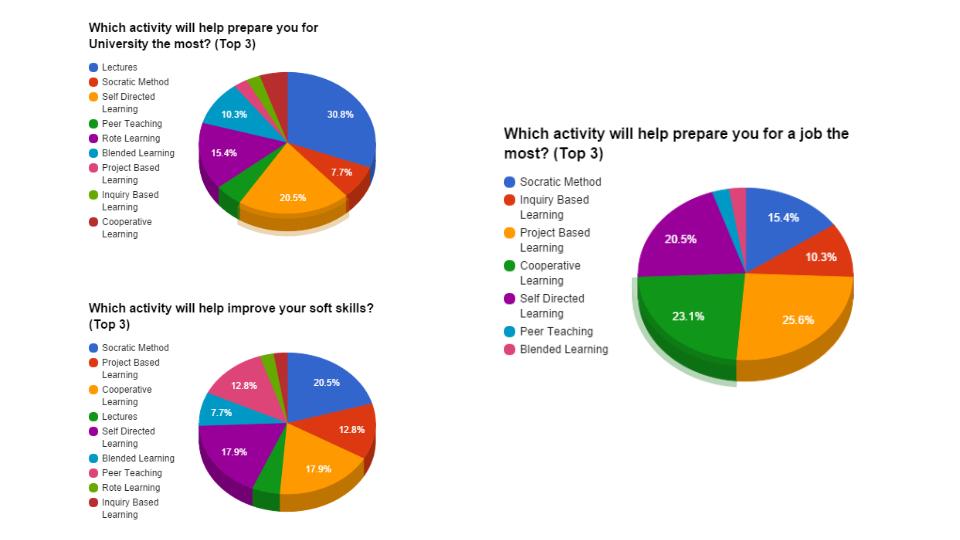 The Purpose of University: This led to a discussion with the students about “What is the purpose of University?” The students in my class said University should teach the knowledge, but that “you’d figure out the rest when you get a job later on.” Yet, I would argue that people often don’t use the knowledge they gained in University so much as the skills they acquire (communication, problem solving, collaboration, etc). We discussed how when Universities were designed long ago, only a very few people went to them, while the rest were in the workforce. University was designed to perpetuate study, research and academia, not to produce people prepared to go into the workforce. Now, a much higher percentage of people are going to University, but Colleges are the places that are teaching skills required for the workforce. All of my students still abide by the belief that you must get a Bachelor’s degree to be successful, but most admitted they know many people who are going to College after University to gain applicable skills.
Insight: I need to do more research into the statistics of employability in relation to education. I believe studies will show that Bachelor’s degrees lead to higher income, but I wonder if that will shift with the continued “academic inflation” that we see today.
The Purpose of University: This led to a discussion with the students about “What is the purpose of University?” The students in my class said University should teach the knowledge, but that “you’d figure out the rest when you get a job later on.” Yet, I would argue that people often don’t use the knowledge they gained in University so much as the skills they acquire (communication, problem solving, collaboration, etc). We discussed how when Universities were designed long ago, only a very few people went to them, while the rest were in the workforce. University was designed to perpetuate study, research and academia, not to produce people prepared to go into the workforce. Now, a much higher percentage of people are going to University, but Colleges are the places that are teaching skills required for the workforce. All of my students still abide by the belief that you must get a Bachelor’s degree to be successful, but most admitted they know many people who are going to College after University to gain applicable skills.
Insight: I need to do more research into the statistics of employability in relation to education. I believe studies will show that Bachelor’s degrees lead to higher income, but I wonder if that will shift with the continued “academic inflation” that we see today.
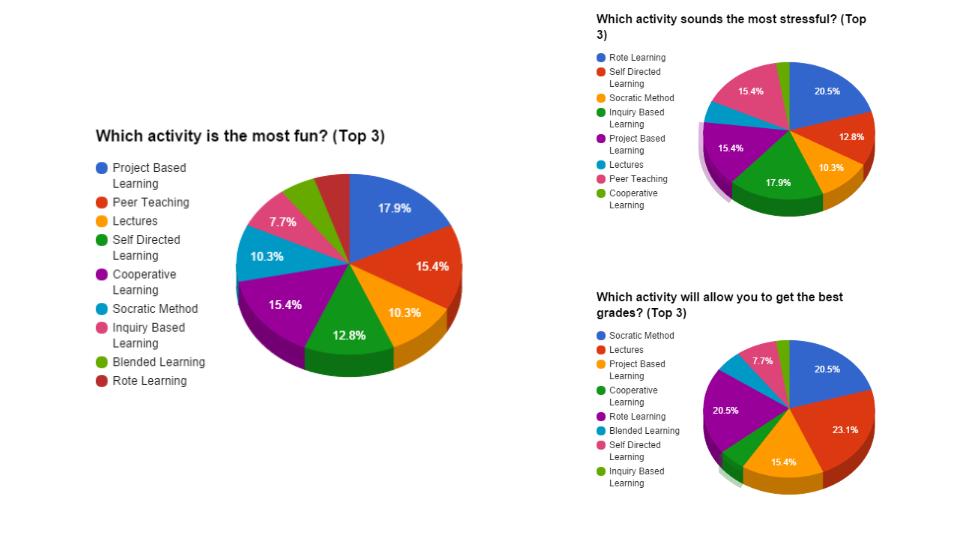 Collaboration: The results indicate that not only do students enjoy working with their peers more than working on their own, but also that activities which require collaboration, teamwork and problem solving are the activities that will best prepare them for the real world. This is part of the reason why I aim to employ cooperative learning structures (ie Kagan) into my classroom, and why I focus so much effort on Project-Based Learning. As Ken Robinson once said, “Collaboration is key to innovation.” However, again we see a disconnect between what the students say they enjoy, or is important, and how they think they learn best, because lectures and rote learning still rate high when asked about how they will get the best grades.
Insight: Maybe the disconnect comes into play because students don’t always see their learning in project-based or inquiry learning. Because no one is telling them the correct answer, they might not actually realize that they are uncovering many right answers along the way. This makes me wonder how I could integrate visible thinking activities with project-based learning.
Collaboration: The results indicate that not only do students enjoy working with their peers more than working on their own, but also that activities which require collaboration, teamwork and problem solving are the activities that will best prepare them for the real world. This is part of the reason why I aim to employ cooperative learning structures (ie Kagan) into my classroom, and why I focus so much effort on Project-Based Learning. As Ken Robinson once said, “Collaboration is key to innovation.” However, again we see a disconnect between what the students say they enjoy, or is important, and how they think they learn best, because lectures and rote learning still rate high when asked about how they will get the best grades.
Insight: Maybe the disconnect comes into play because students don’t always see their learning in project-based or inquiry learning. Because no one is telling them the correct answer, they might not actually realize that they are uncovering many right answers along the way. This makes me wonder how I could integrate visible thinking activities with project-based learning.
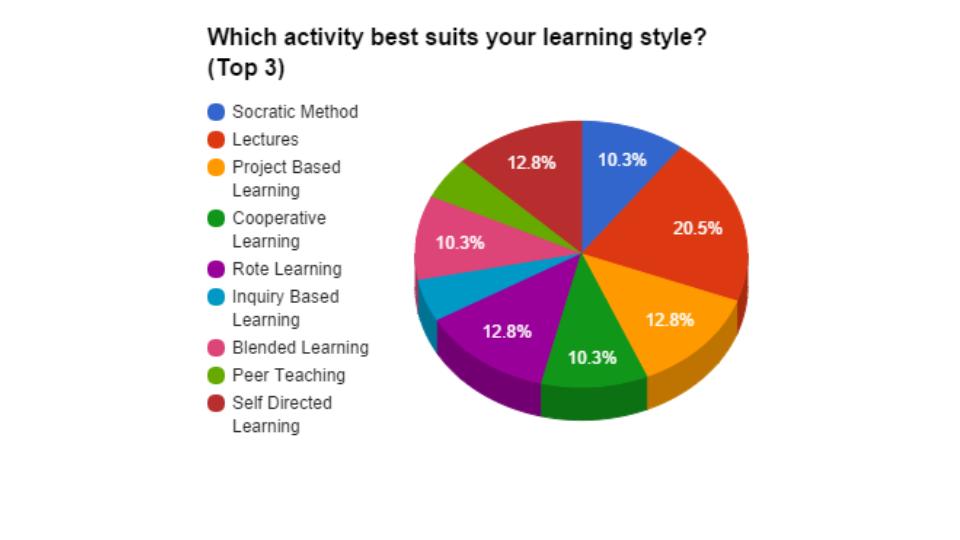 Assessment vs. Learning: After a great conversation with @gnichols I realized that perhaps my research method is slightly flawed. He pointed out that students might think that they prefer lectures; but, if I were to ask them about their preferences for demonstrating what they learned, they might not all be so keen on tests, which are usually associated with lectures or rote learning.
Insight: I need to do further investigation into students’ preferences. I will ask them to do a similar activity, ranking their choices for methods of assessment and evaluation. I hypothesize that students will prefer choice and variety in both the method of assessment (assignments, quizzes, tests, presentations, etc) and in the method of delivery of their understanding (conversations, observations, products). But...who knows, maybe the results will be just as unpredictable!
Further Research: In a recent article on Singularity Hub, the blog for Singularity University, the writers asked some of America’s “smartest” teens how they would redesign school. Their results are slightly different than mine, although their results are more of what I would have hoped my students would indicate.
They found that the top six trends in students responses (they don’t indicate how they collected this data) were:
Assessment vs. Learning: After a great conversation with @gnichols I realized that perhaps my research method is slightly flawed. He pointed out that students might think that they prefer lectures; but, if I were to ask them about their preferences for demonstrating what they learned, they might not all be so keen on tests, which are usually associated with lectures or rote learning.
Insight: I need to do further investigation into students’ preferences. I will ask them to do a similar activity, ranking their choices for methods of assessment and evaluation. I hypothesize that students will prefer choice and variety in both the method of assessment (assignments, quizzes, tests, presentations, etc) and in the method of delivery of their understanding (conversations, observations, products). But...who knows, maybe the results will be just as unpredictable!
Further Research: In a recent article on Singularity Hub, the blog for Singularity University, the writers asked some of America’s “smartest” teens how they would redesign school. Their results are slightly different than mine, although their results are more of what I would have hoped my students would indicate.
They found that the top six trends in students responses (they don’t indicate how they collected this data) were:
Students completing the card sort activity.
Analysis
The Purpose of School: I added in the question about the purpose of school during the conversation that I had with the students before they started the activity. I realized that my idea of what I was preparing them for (real life) was different then their idea of what they were being prepared for (postsecondary) and therefore, they had different ideas on what learning activities would be effective.
Lectures: It’s no surprise then, that lectures rate high on students’ rankings when it comes to preparing for University, learning the most amount of information, getting the best grades, or learning about topic deeply (though I beg to differ on this one). It’s also clear that the students realize that there is no use for lectures when it comes to preparing for a job (it didn’t even make the list) or improving soft skills. I was surprised to discover that several students found lectures to be “fun” and most suited to their learning style. However, if you look at the results for which is most stressful, you will see that lectures are seen as an unstressful way to learn.
Insight: Students believe that lectures will prepare them for university; but, I wonder if they ranked highly because it is easy for students to sit and passively listen while the teacher does all of the hard work.
It is also interesting to note that Project Based Learning, Inquiry Based Learning and Cooperative Learning barely made the charts on preparing for University and yet they are seen as activities that will best prepare students for a job in the future.
The Purpose of University: This led to a discussion with the students about “What is the purpose of University?” The students in my class said University should teach the knowledge, but that “you’d figure out the rest when you get a job later on.” Yet, I would argue that people often don’t use the knowledge they gained in University so much as the skills they acquire (communication, problem solving, collaboration, etc). We discussed how when Universities were designed long ago, only a very few people went to them, while the rest were in the workforce. University was designed to perpetuate study, research and academia, not to produce people prepared to go into the workforce. Now, a much higher percentage of people are going to University, but Colleges are the places that are teaching skills required for the workforce. All of my students still abide by the belief that you must get a Bachelor’s degree to be successful, but most admitted they know many people who are going to College after University to gain applicable skills.
Insight: I need to do more research into the statistics of employability in relation to education. I believe studies will show that Bachelor’s degrees lead to higher income, but I wonder if that will shift with the continued “academic inflation” that we see today.
Collaboration: The results indicate that not only do students enjoy working with their peers more than working on their own, but also that activities which require collaboration, teamwork and problem solving are the activities that will best prepare them for the real world. This is part of the reason why I aim to employ cooperative learning structures (ie Kagan) into my classroom, and why I focus so much effort on Project-Based Learning. As Ken Robinson once said, “Collaboration is key to innovation.” However, again we see a disconnect between what the students say they enjoy, or is important, and how they think they learn best, because lectures and rote learning still rate high when asked about how they will get the best grades.
Insight: Maybe the disconnect comes into play because students don’t always see their learning in project-based or inquiry learning. Because no one is telling them the correct answer, they might not actually realize that they are uncovering many right answers along the way. This makes me wonder how I could integrate visible thinking activities with project-based learning.
Assessment vs. Learning: After a great conversation with @gnichols I realized that perhaps my research method is slightly flawed. He pointed out that students might think that they prefer lectures; but, if I were to ask them about their preferences for demonstrating what they learned, they might not all be so keen on tests, which are usually associated with lectures or rote learning.
Insight: I need to do further investigation into students’ preferences. I will ask them to do a similar activity, ranking their choices for methods of assessment and evaluation. I hypothesize that students will prefer choice and variety in both the method of assessment (assignments, quizzes, tests, presentations, etc) and in the method of delivery of their understanding (conversations, observations, products). But...who knows, maybe the results will be just as unpredictable!
Further Research: In a recent article on Singularity Hub, the blog for Singularity University, the writers asked some of America’s “smartest” teens how they would redesign school. Their results are slightly different than mine, although their results are more of what I would have hoped my students would indicate.
They found that the top six trends in students responses (they don’t indicate how they collected this data) were:
- Make it about me
- Let’s DO things
- Don’t ditch me in an online course (our results align on this point - Greenwood students also indicate that they don’t like blended learning)
- Be my coach
- Teach me relevant skills
- Foster a growth mindset
- conduct more research with my students related to their preferences for assessment and evaluation
- learn more about what youth in other places are saying about the future of school
- investigate post secondary institutions that are changing the paradigm of university, such as Singulartiy Hub and Quest University