
Last week, my grade 12 students presented their final "deliverables" created in their "Choose Your Own Adventure" (CYOA) unit in Green Industries. For this final unit of our two year foray into the study of forestry, agriculture, urban planning and landscape architecture, students were asked to create their own plan of action for the unit based on the curriculum expectations for the course.
Each student chose an area of interest ranging from urban forestry to sub-irrigation to playground design, developed a research question, and then created their own plan of action including "deliverables" (which they would use to demonstrate their learning) and their own due dates. I am incredibly proud of each of them for following their interests, creating for themselves a meaningful experience that they each seemed to truly enjoy.
While this is not the first time I have run the CYOA project, this year I found the unit to be more successful than my first attempt at student-designed curriculum. As described in an earlier post, last year's students met this challenge with mixed results, so I made a list of improvements for this year's class, most notably, moving the project to the end of the year and providing more real-world connections for students to deepen their understanding.
The results show that this type of student-directed curriculum development can be successful. For example, in Luke's study of the effects of the ice storm on Toronto's tree canopy, I connected him with the non-profit organization LEAF. He was able to attend an event at the Toronto Botanical Garden and interview City of Toronto Forestry experts. This allowed him to not only practice developing good questioning skills, but also gain a much deeper understanding of the complex challenge facing Toronto as we try to recover from this ice storm.
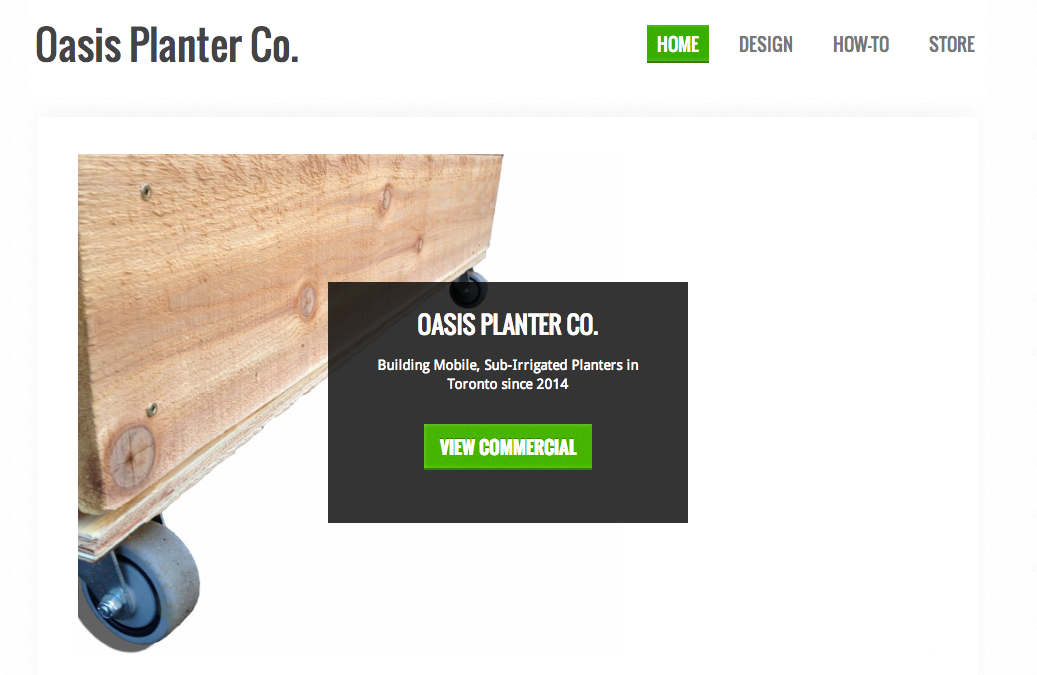 Similarly, Luke's classmates each found their own niche to investigate and threw themselves into developing sound research questions, applying their practical skills, or continuing to hone their understanding of a topic from the course. After four weeks of planning, researching and creating, they produced "deliverables" that range from the creation of an innovative rooftop playground for the Canadian High School Design Competition and a fully operational online business that sells custom-built sub-irrigated planters (Oasis Planter Co.) to an interactive map on the history of landscape architecture to the design of a food forest ecosystem.
However, for me the real success in this year's CYOA project was not so much in these final products or even understanding of the topics that student's chose to study. For me, the success of this project came in the independent thinking and planning skills that students demonstrated by developing their own learning path.
Earlier today, I was scanning twitter when a post caught my eye and led me to a website called Knowledge Building:
Similarly, Luke's classmates each found their own niche to investigate and threw themselves into developing sound research questions, applying their practical skills, or continuing to hone their understanding of a topic from the course. After four weeks of planning, researching and creating, they produced "deliverables" that range from the creation of an innovative rooftop playground for the Canadian High School Design Competition and a fully operational online business that sells custom-built sub-irrigated planters (Oasis Planter Co.) to an interactive map on the history of landscape architecture to the design of a food forest ecosystem.
However, for me the real success in this year's CYOA project was not so much in these final products or even understanding of the topics that student's chose to study. For me, the success of this project came in the independent thinking and planning skills that students demonstrated by developing their own learning path.
Earlier today, I was scanning twitter when a post caught my eye and led me to a website called Knowledge Building:
Similarly, Luke's classmates each found their own niche to investigate and threw themselves into developing sound research questions, applying their practical skills, or continuing to hone their understanding of a topic from the course. After four weeks of planning, researching and creating, they produced "deliverables" that range from the creation of an innovative rooftop playground for the Canadian High School Design Competition and a fully operational online business that sells custom-built sub-irrigated planters (Oasis Planter Co.) to an interactive map on the history of landscape architecture to the design of a food forest ecosystem.
However, for me the real success in this year's CYOA project was not so much in these final products or even understanding of the topics that student's chose to study. For me, the success of this project came in the independent thinking and planning skills that students demonstrated by developing their own learning path.
Earlier today, I was scanning twitter when a post caught my eye and led me to a website called Knowledge Building:
Students as curriculum designers. Deep constructivism. http://t.co/cF64nsB3Ug #edchat #scardamalia #video #inquiry @HWDSB21CL
— Heidi Siwak (@HeidiSiwak) April 29, 2014
The site, developed in partnership between two OISE-based researchers and the Ontario Ministry of Education, has a goal of helping teachers build classrooms where students "work to identify problems of understanding, create theories, carry out research and investigations in order to refine their theories over time, revise their problems and strategies, and share and monitor the progress of the community towards its goals of advancing knowledge." I was trilled, as this has long been the goal for my teaching practice, as I recently described on Greenwood's blog, Personalized Learning.
This video in particular described how the CYOA project is a form of "deep-constructivism." In the video, Dr. Marlene Scardamalia explains that when students become the designers of their own learning experiences, they develop high level executive functioning skills and mimic the way we live in the real world.
I am inspired and emboldened by Dr. Scardamalia's research and her goal of moving Ontario's education system beyond skill development to developing "new compentencies" to become a "knowledge creating society." I look forward to learning more about the work of the Institute for Knowledge Innovation and Technology at OISE.
In the meantime, I plan to share some of these Knowledge Building videos with my Grade 12 students and ask them to reflect on their experience in the CYOA unit. Hopefully they will come to the conclusion that the skills they learned in this course can be transferred to their post-secondary and work experiences in the future, even if they don't plan to become an arborist or a landscape architect anytime soon.
Congratulations Leslie, what a powerful experience for your students and what a wonderful testimonial to the work you do. Your students will find their sense of their own capacity and their view of the future will be changed for the rest of their lives. Thank you for sharing.
Dear Ms. Gallagher,
Thank you so much for taking the time to read my post. Your encouraging words are much appreciated, as is the work that the Ministry is doing to promote this type of authentic learning.
Best,
Leslie