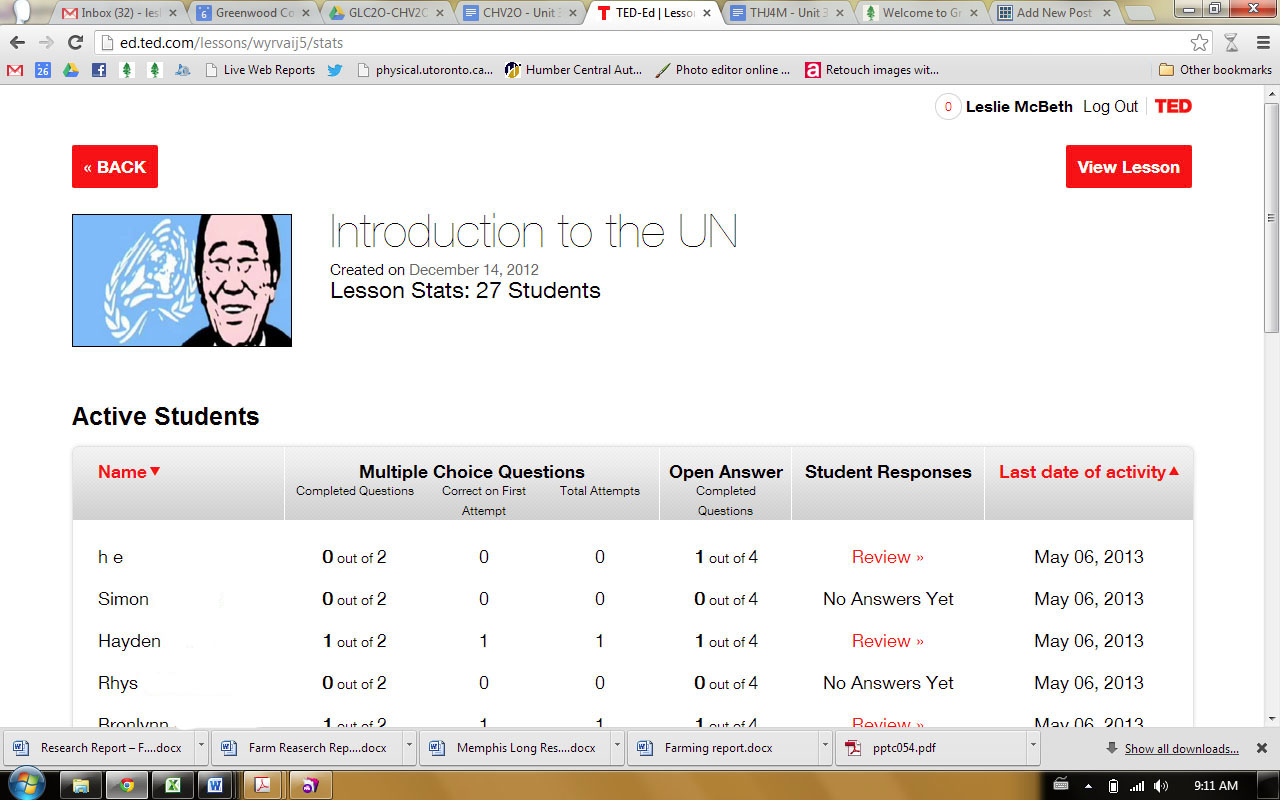
 One of my goals for my third year as a teacher has been to develop the Civics course into a blended learning course. I was eager to take on this challenge as the Civics course has great potential to be integrated with other courses and real world opportunities for student engagement.
I began by taking a look at the current Civics course of study, breaking it down into the "essential" modules and the "optional" modules. The flexibility of the Ontario curriculum expectations for this course allows for teachers to approach teaching Civics from many different angles. At Greenwood, our Canada World Studies department aims to provide authentic learning experiences for students based on real-world events. Therefore, the flexibility of this course is crucial in our ability to respond to current events such as elections and international events. Dividing the course into essential and optional modules will allow the classroom teacher to modify course on an adhoc basis to fit around current events that pop up during the school year.
Personalization in the blended Civics course will come through choice of topics, content, and products, rather than through self-pacing as we see in Math courses. Here's a framework that I put together to guide the development of the course:
One of my goals for my third year as a teacher has been to develop the Civics course into a blended learning course. I was eager to take on this challenge as the Civics course has great potential to be integrated with other courses and real world opportunities for student engagement.
I began by taking a look at the current Civics course of study, breaking it down into the "essential" modules and the "optional" modules. The flexibility of the Ontario curriculum expectations for this course allows for teachers to approach teaching Civics from many different angles. At Greenwood, our Canada World Studies department aims to provide authentic learning experiences for students based on real-world events. Therefore, the flexibility of this course is crucial in our ability to respond to current events such as elections and international events. Dividing the course into essential and optional modules will allow the classroom teacher to modify course on an adhoc basis to fit around current events that pop up during the school year.
Personalization in the blended Civics course will come through choice of topics, content, and products, rather than through self-pacing as we see in Math courses. Here's a framework that I put together to guide the development of the course:
Goals of the Civics program:
- provide the best of both face to face and online instruction.
- allow students to engage in an informed dialogue about current real-world issues and apply their knowledge of fundamental concepts in the civics curriculum (democracy, human rights, citizenship) to those issues in a meaningful way.
- provide a progam that is personalized by choice of topical modules, completed both independently and in small groups.
- provide an opportunity for students to apply critical thinking skills in a real-world environment through project-based learning
- connect CHV2O curriculum with CHC2D curriculum through the use of integrated assignments, lectures, and guest speakers
Blended learning in the Civics classroom will:
- allow students to choose modules and topics from a menu of projects and independent study areas - allow for flexible integration between CHV2O and CHV2D
- incorporate some mandatory face-to-face meetings to allow for students to debate and dialogue around current events and issues
- allow students to self-pace to a certain extent - they will complete online modules on a flexible schedule, but must be prepared for in-class debates, discussions, activities, projects and field trips at certain points during the year
- cater to different learning styles
- incorporate project-based learning
- provide structures which allow students to get support when needed and to move ahead or extend their learning when needed
- transform the role of the teacher into a coach and guide, who assists with concept clarification, questioning and deeper problem solving.