"The capacity to innovate — the ability to solve problems creatively or bring new possibilities to life — and skills like critical thinking, communication and collaboration are far more important than academic knowledge." - Tony Wagner
"Need a job? Invent it", the title of a recent article in the New York Times caught my attention immediately as it appealed to my entrepreneurial spirit. The argument is that ever since the dot com boom in the late 90's and the rise of Silicone Valley, the employment marketplace has been rapidly changing as young innovators have built entire sectors of the economy out of thin air. Now, with app developers making billions over night and 14 year old kids building apps and solving world problems from their parent's basements, we see how the old concept of getting a job and working away at it until you retire is no longer a viable option. And if the purpose of school in the industrialized age was to prepare workers for a job, then the purpose of school in the 21st century is surely to prepare young people to be innovative, creative and entrepreneurial.
A quick peek at LinkedIn shows that many accomplished individuals show very little longevity in one position. People change jobs as often as they change the oil in their cars. Moving from company to company is often required for growth, or simply to avoid boredom. As such, young people need to be flexible and be motivated to continue pushing themselves beyond their comfort zones.
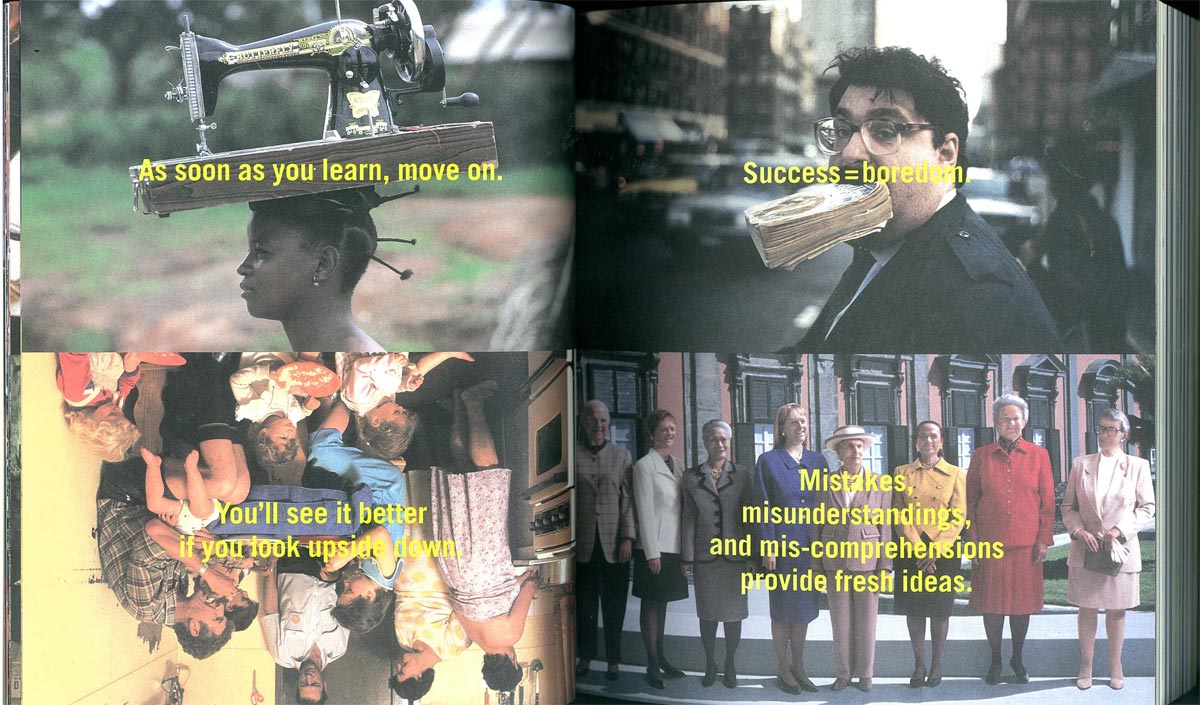 Tibor Kalman, perhaps one of the most infamous design thinkers of the 20th century, once said "As soon as you learn, move on. You'll see it better if you look upside down. Success=boredom. Mistakes, misunderstandings, and mis-comprehensions provide fresh ideas." I have long been a fan of Kalman's work and this philosophy of lifelong learning. If you are no longer being challenged, you are no longer learning.
One of the things that I love about Greenwood is that I am constantly being challenged, and that the school promotes a culture where teachers are constantly challenging students. I bring Kalman's philosophy into my classroom by challenging students to look at things differently - to view a problem from many angles, to place themselves in the shoes of various stakeholders, to take on a role in an authentic situation. I also encourage students to make mistakes - there is no "right" answer; no prescribed method for solving the problem. I grade students on their process, not just the product, so if all their plants die, or they don't figure out a way to save child soldiers in Uganda, they can still be successful by reflecting on the process.
Through these processes, my goal is to develop a culture of thinking in my students ("question everything" is the motto in my civics classes). In this new economy described by Mr. Wagner, young people need to be able to think, create, and innovate more than they need to know the "right" answer.
Moving forward, I would like to take Mr. Wagner up on his challenge of preparing students to "focus more on teaching the skill and will to learn and to make a difference and bring the three most powerful ingredients of intrinsic motivation into the classroom: play, passion and purpose.”
Tibor Kalman, perhaps one of the most infamous design thinkers of the 20th century, once said "As soon as you learn, move on. You'll see it better if you look upside down. Success=boredom. Mistakes, misunderstandings, and mis-comprehensions provide fresh ideas." I have long been a fan of Kalman's work and this philosophy of lifelong learning. If you are no longer being challenged, you are no longer learning.
One of the things that I love about Greenwood is that I am constantly being challenged, and that the school promotes a culture where teachers are constantly challenging students. I bring Kalman's philosophy into my classroom by challenging students to look at things differently - to view a problem from many angles, to place themselves in the shoes of various stakeholders, to take on a role in an authentic situation. I also encourage students to make mistakes - there is no "right" answer; no prescribed method for solving the problem. I grade students on their process, not just the product, so if all their plants die, or they don't figure out a way to save child soldiers in Uganda, they can still be successful by reflecting on the process.
Through these processes, my goal is to develop a culture of thinking in my students ("question everything" is the motto in my civics classes). In this new economy described by Mr. Wagner, young people need to be able to think, create, and innovate more than they need to know the "right" answer.
Moving forward, I would like to take Mr. Wagner up on his challenge of preparing students to "focus more on teaching the skill and will to learn and to make a difference and bring the three most powerful ingredients of intrinsic motivation into the classroom: play, passion and purpose.”
Tibor Kalman, perhaps one of the most infamous design thinkers of the 20th century, once said "As soon as you learn, move on. You'll see it better if you look upside down. Success=boredom. Mistakes, misunderstandings, and mis-comprehensions provide fresh ideas." I have long been a fan of Kalman's work and this philosophy of lifelong learning. If you are no longer being challenged, you are no longer learning.
One of the things that I love about Greenwood is that I am constantly being challenged, and that the school promotes a culture where teachers are constantly challenging students. I bring Kalman's philosophy into my classroom by challenging students to look at things differently - to view a problem from many angles, to place themselves in the shoes of various stakeholders, to take on a role in an authentic situation. I also encourage students to make mistakes - there is no "right" answer; no prescribed method for solving the problem. I grade students on their process, not just the product, so if all their plants die, or they don't figure out a way to save child soldiers in Uganda, they can still be successful by reflecting on the process.
Through these processes, my goal is to develop a culture of thinking in my students ("question everything" is the motto in my civics classes). In this new economy described by Mr. Wagner, young people need to be able to think, create, and innovate more than they need to know the "right" answer.
Moving forward, I would like to take Mr. Wagner up on his challenge of preparing students to "focus more on teaching the skill and will to learn and to make a difference and bring the three most powerful ingredients of intrinsic motivation into the classroom: play, passion and purpose.”