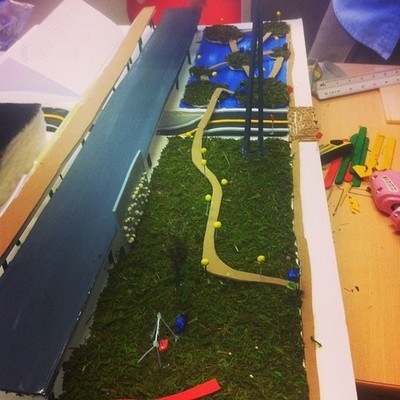
One of my priorities as an educator is to connect students to the real world while also making connections to curriculum. Whether through a community service connection such as building a school garden for a local elementary school or through participating in a Student Vote alongside thousands of other high school students, I am always seeking opportunities to extend my classroom beyond the walls of the school.
In December 2012 just such an opportunity knocked on my door. I heard about an the Green Line international ideas competition through a fellow member of the People Plan Toronto steering committee. The goal of the competition was to raise awarness, dialogue and public interest in improving public access to a 5km long hydro corridor that runs through mid-town Toronto.
Upon viewing the website, I discovered that the compeition was actually modeled after a competition that I helped to run while working for the Design Trust for Public Space in NYC. In addition, this was the same competition for which I created a partnership with the Center for Urban Pedagogy, to engage local high school students in the design of the landscape. I immediately knew that this was an opportunity for my students to be engaged in a meaningful project-based learning experience.
Here's how this project went down:
1. Students were introduced to the competition through a
guided reading of an article and the press release for the competition.
2. As a class, students completed a mapping activity to provide context for the site and to gain a better undestanding of the competition brief.
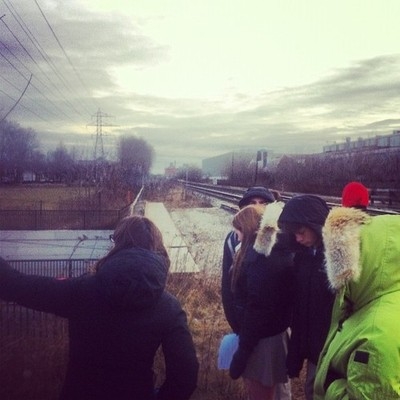
3. We went on a tour of the Green Line site with competition organizer and architect Helena Grdadolnik. During the tour, students completed a
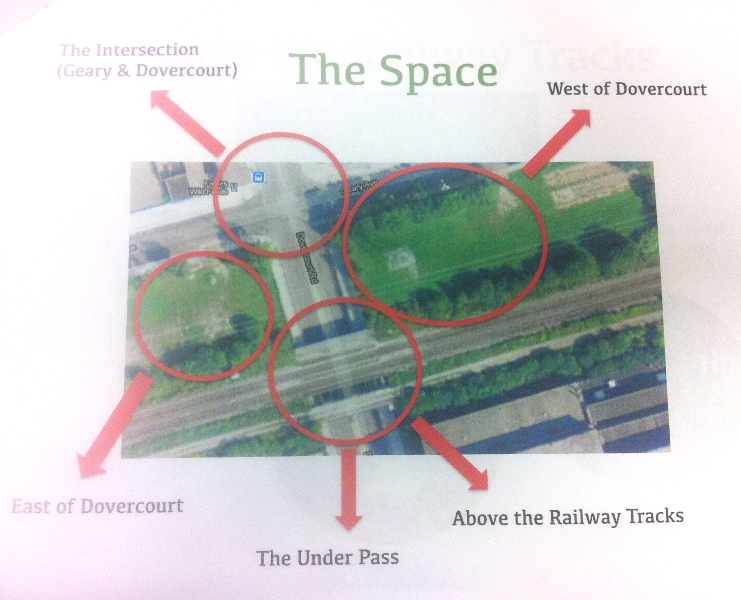
site analysis, which introduced them to the four main goals of the competition: to improve the mobility, safety, usability, and aesthetics of the site.
Back in the classroom, students used the DOVE brainstorming approach to identify problems and generate potential solutions based on their observations during the trip.
5. Using the Design Trust's Grand Army Plaza Competition as a case study, students chose one competition entry and
analysed the entry based on the success criteria provided. This allowed students to gain a better understand of what makes a successful landscape design and also introduced them to some of the formats through which they will be required to communicate their ideas.
6. We reviewed the basics of landscape architecture that were covered in the Grade 11 course: site plans, inspiration collages, renderings, written statements.
7. Using images of the site and tracing paper, students generated ideas through a series of rough sketches
8. Students were provided with a breakdown of the deliverables for the project/competition, as well as a checklist that will be used for grading their entries.
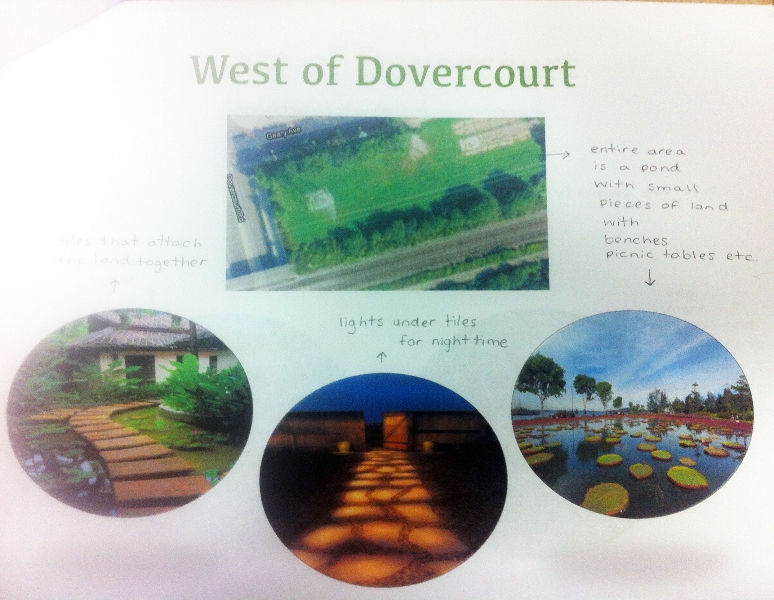
9. Students created a collage/mood board for their entry, drawing from inspiration from a variety of online and print resources provided.
10. Students created a site plan that outlined their ideas for addressing the issues in the space.
11. Students learned to use AutoCAD WS, an online version of the AutoCAD software to help them prepare their competition boards.
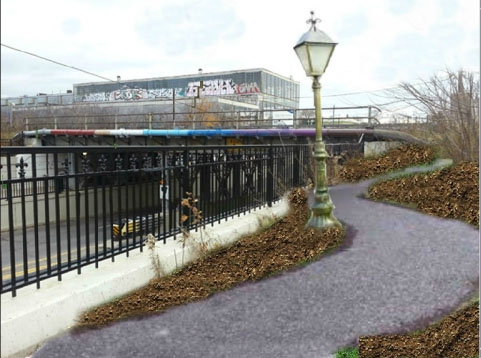
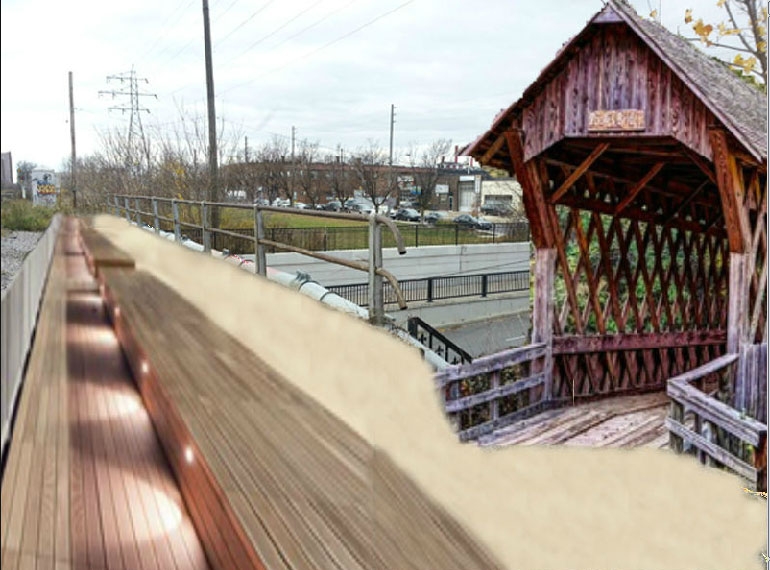
12. Students learned to use Pixlr, an online version of Photoshop software to help them create renderings of their ideas for the competition.
13. Students summarized their entry to the competition in a 200 word statement, which would be included in their competition entry.
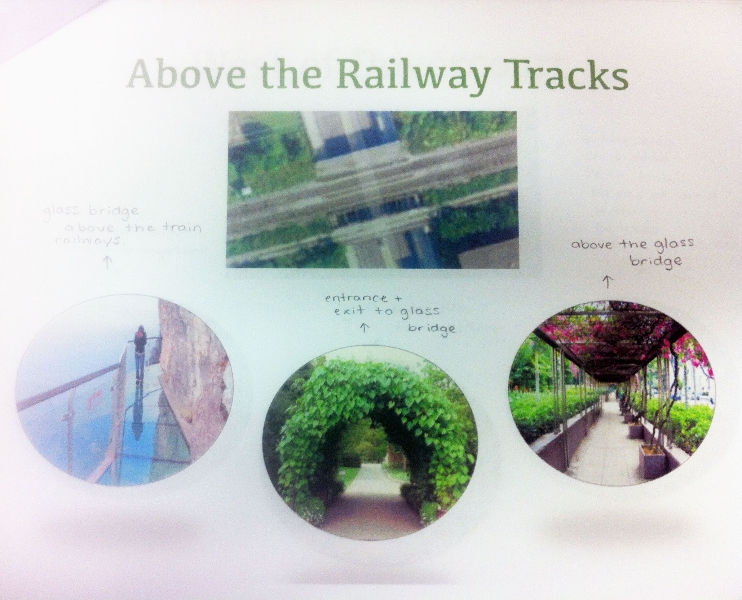
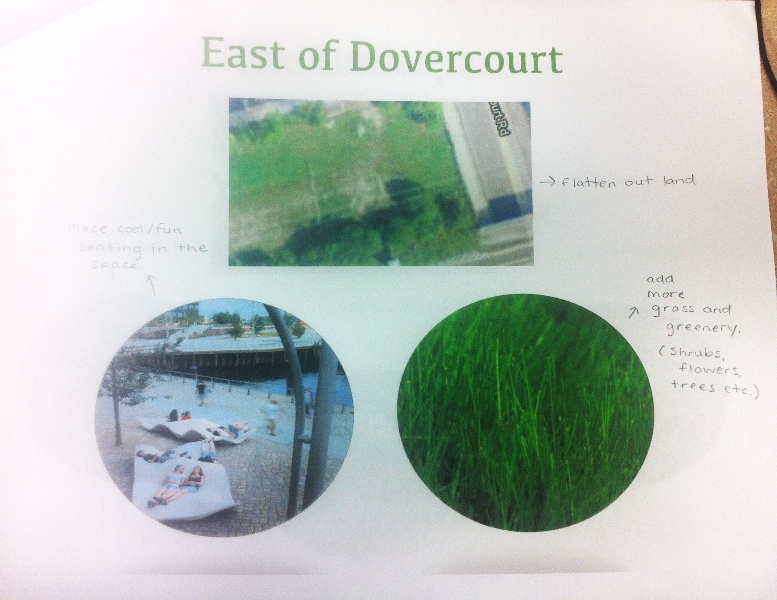
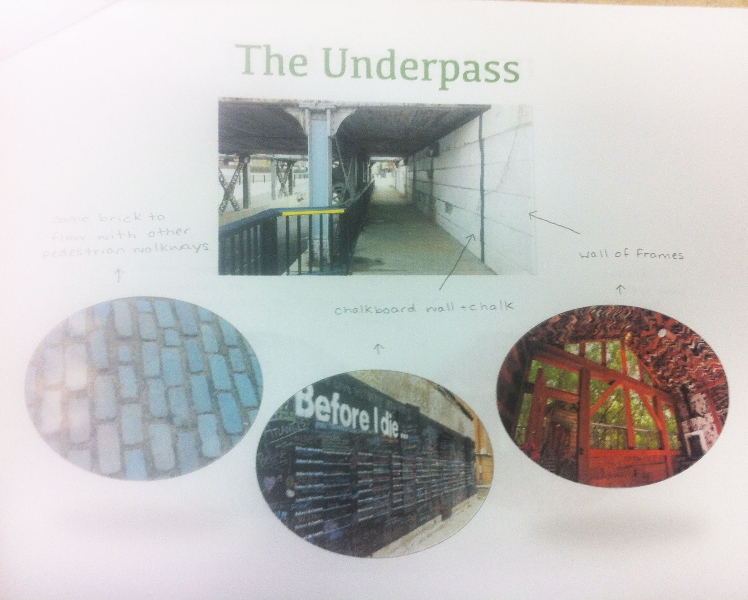
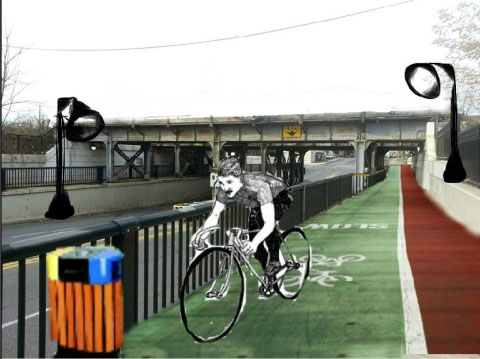
14. Students selected a winner from the class and this entry was submitted to the competition. Michael's design was chosen as having met the criteria in the most creative way, and his project was submitted to the competition. Currently, Michael's entry is one of 15 entries that have been chosen to be
displayed on the Green Line Competition website. Both Michael and his mother were thrilled to see that his design made it this far, and this provided a moment of triumph for a student who often struggles in other classes.
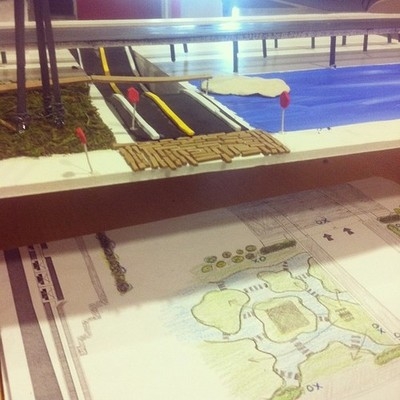
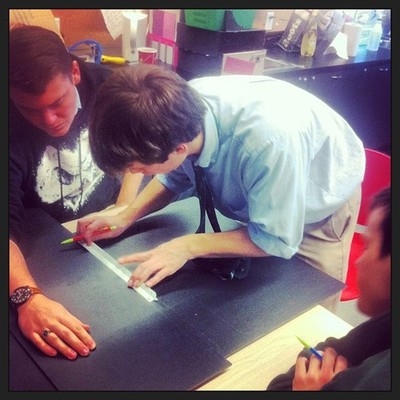
15. We built models! Students worked in teams of 3-4, combining the best of their ideas together in order to create a scale model of the site. They learned how to use an architect's scale and applied this skill to build their model. In addition they were required to address the same success criteria as in their competition entry.
What I learned from this project:
- Students were HIGHLY motivated by the real world application -- and the fact that there was a $1000 prize for the winning entry. Every student in the class met every deadline leading up to the competition, no small feat considering that many student in this class struggle with time management and organization.
- Students enjoyed the opportunity to learn new software and apply it in a creative setting.
- Adding the model component at the end was an excellent way for students to come together in teams and share their individual ideas from the competition. In the future, I would move the model building up on the schedule, to allow students to work through the problems in this tangible fashion prior to coming up with their final designs. The results of the model building were much more refined and polished than those presented in the plan drawings. The process of model building gave students a more concrete understanding of the site and its challenges.
- By utilizing the same success criteria for each phase of the project (focusing on mobility, usability, safety and aesthetics), the students became very familiar with these goals and by the end of the project they were all easily able to articulate common solutions in landscape architecture and apply these principles to their designs.
Challenges for next year:
- Finding a similar competition. While I could re-use the resources for this competition, the real-world audience for this project is really what made it a successful project-based learning experience for the students. The fact that it was not only well timed, but also here in Toronto made it particularly well suited for study. Hopefully next year I will be able to find a similar experience for the Grade 12 students.